15 Most Sustainable Wood-Based Clothing Brands: The Conscious Consumer’s Guide



Impactful Ninja is reader-supported. When you buy through links on our site, we may earn an affiliate commission.
Learn more
Learn more
.
Hey fellow impactful ninja ? You may have noticed that Impactful Ninja is all about providing helpful information to make a positive impact on the world and society. And that we love to link back to where we found all the information for each of our posts. Most of these links are informational-based for you to check out their primary sources with one click. But some of these links are so-called "affiliate links" to products that we recommend. First and foremost, because we believe that they add value to you. For example, when we wrote a post about the environmental impact of long showers, we came across an EPA recommendation to use WaterSense showerheads. So we linked to where you can find them. Or, for many of our posts, we also link to our favorite books on that topic so that you can get a much more holistic overview than one single blog post could provide. And when there is an affiliate program for these products, we sign up for it. For example, as Amazon Associates, we earn from qualifying purchases. First, and most importantly, we still only recommend products that we believe add value for you. When you buy something through one of our affiliate links, we may earn a small commission - but at no additional costs to you. And when you buy something through a link that is not an affiliate link, we won’t receive any commission but we’ll still be happy to have helped you. When we find products that we believe add value to you and the seller has an affiliate program, we sign up for it. When you buy something through one of our affiliate links, we may earn a small commission (at no extra costs to you). And at this point in time, all money is reinvested in sharing the most helpful content with you. This includes all operating costs for running this site and the content creation itself. You may have noticed by the way Impactful Ninja is operated that money is not the driving factor behind it. It is a passion project of mine and I love to share helpful information with you to make a positive impact on the world and society. However, it's a project in that I invest a lot of time and also quite some money. Eventually, my dream is to one day turn this passion project into my full-time job and provide even more helpful information. But that's still a long time to go. Stay impactful,Affiliate Disclosure
Why do we add these product links?
What do these affiliate links mean for you?
What do these affiliate links mean for us?
What does this mean for me personally?
Wood is a material preferred by most environmentally-conscious consumers. And understandably so, because wood’s renewability and biodegradability are superior to materials like fossil-based plastics. Yet, not all wood comes from the same forests. Wood origins can be murky, and turning wood into textiles can be chemical-intensive. Unfortunately, fashion greenwashing makes it even harder for you and all other consumers to figure out which rayon clothing brands offer the most eco-friendly clothes. So, we had to ask: Which are the most sustainable wood-based clothing brands?
The most sustainable wood-based clothing brands include Patagonia, MATE the Label, and Tentree, which use low-impact materials, employ full traceability, and strive for textile circularity. In addition, ARMEDANGELS and Mara Hoffman commit to fair trade practices and lower carbon footprints.
Whether you are searching for a versatile top, an elegant dress, or some comfortable underwear to add to your wardrobe without negatively impacting the soil, the water, the animals, and other people, there is a brand for you. So, let’s keep reading to learn more about the most sustainable wood-based clothing brands and how they ensure sustainable, ethical practices.
Here’s How Sustainable Wood-Based Fabrics Generally Are
Wood-based fabrics are made with one type of fiber or a blend of several fibers based on plant cellulose from trees or tree-like species. The main types of wood-based fibers are viscose, modal, lyocell, and acetate. These fibers can be regenerated in various chemical and mechanical processes using many kinds of wood feedstock (trees in natural forests, trees in planted forests, waste from the forest floor, and pre-consumer and post-consumer cellulose-based waste). Consequently, the sustainability of wood-based fabrics varies.
“Sustainable: The ability to be maintained at a certain rate or level | Avoidance of the depletion of natural resources in order to maintain an ecological balance”
Oxford Dictionary
To understand the sustainability of wood-based textiles, we’ve assessed the life-cycle and each stage’s sustainability. This life-cycle assessment (LCA) is a method to evaluate the environmental impacts of products and materials. Here’s the quick summary of our LCA of wood-based textiles!
What makes sustainable wood-based fabrics: Lyocell is generally considered the most sustainable wood-based fabric. It is also ranked class B on The Common Objective’s Made-By Environmental Benchmark for Fibres, higher than all other wood-based fabrics. The reason lies mainly in lyocell’s closed-loop manufacturing system that uses organic solvents instead of synthetic chemicals, as in the case of modal, viscose, and acetate.
Additionally: Modal and viscose fabrics, such as those made by Lenzing, can be relatively sustainable when made with traceable cellulose fibers in closed-loop systems that recover and reuse liquids and chemicals.
Here’s How We Selected the Most Sustainable Wood-Based Clothing Brands
The brands on this list were chosen based on their commitment and actions to promote sustainable practices while reducing the environmental impacts of the textile industry.
They are transparent about their materials, processes, and workforce management within their supply chain.
Some brands focus their efforts on reducing waste and optimizing natural resources while others strive to reduce the carbon footprint of their clothes.
All of these brands share the commitment to reshape the textile industry toward a more sustainable and Earth-friendly sector.
These Are the 15 Most Sustainable Wood-Based Clothing Brands
Most Sustainable Wood-Based Clothing Brands
Overall, these wood-based clothing brands are sustainable. Yet, they take various approaches to reduce environmental impacts and uphold ethical standards. Let’s dive into each brand and find out more.
Patagonia: Everyday Wear for Those Who Care
“Together, we can prioritize purpose over profit and protect this wondrous planet, our only home.”
Patagonia
🌎
How do they ensure their sustainability?
Patagonia puts sustainability at the center of their operation. They work to reduce, rather than simply offset, carbon emissions where it matters the most: in the supply chain and material manufacturing. They reduce their carbon footprint by removing high-impact virgin fossil-based fibers from their collections, using “Environmental Profit and Loss” to guide their production decision, and helping their suppliers to cut emissions. Patagonia’s fall 2023 collection is made up mostly of preferred materials (91% by fabric weight), including recycled cotton, regenerative organic cotton, hemp, and Man-Made Cellulose Fibers (wood-based fabrics), which include modal, lyocell, and REFIBRA™, all made by Lenzing. On top of that, Patagonia’s Worn Wear program encourages customers to repair and recycle their products, extending the textile lifecycle and reducing waste. Lastly, Patagonia is certified as a B Corporation and a Bluesign® brand.
🌐
How do they ensure their ethics?
Patagonia commits to fair trade practices. Through the partnership with Fair Trade USA, they currently produce 86% of their clothes in 20 Fair Trade Certified™ factories. Patagonia pays a premium for every item produced in such factories, accumulating in a fund for workers to use in their chosen community projects, whether in healthcare or parent support or to withdraw as a cash bonus. Additionally, they have various social responsibility programs to prevent harm and create positive impacts on the lives of apparel workers in their supply chain. These include the Fair Labor Association, the Living Wage Program, the Migrant Workers Program, and the Responsible Purchasing Practices. Patagonia is also fully transparent about the locations of their facilities and suppliers. Regarding animal rights, Patagonia has developed the Patagonia Wool Standard, which uses the Responsible Wool Standard as a foundation but goes beyond it in several key areas of animal welfare practices.
🤝
Are they part of any giving-back programs?
Since 1985, Patagonia has pledged 1% of sales annually to environmental causes. They have awarded over $89 million in cash and in-kind donations to domestic and international grassroots environmental groups, making a difference in their local communities. In 2022, the founder of Patagonia gave away his family’s ownership of the company to the newly created Patagonia Purpose Trust and the not-for-profit organization Holdfast Collective, ensuring that all future profits from the company are used to fight the climate and extinction crisis.
🛍️
What is their product range?
- Best for: kidswear, menswear, womenswear
- Product range: shirts, pants, jackets, blazers, hoodies, sweatshirts, T-shirts, shorts, plus-size
- Price range: $$$
- Size range: XXS–XXXL
MATE the Label: Clean From Seed to Skin

“To provide people everywhere with essentials that are clean from seed to skin.”
MATE the Label
🌎
How do they ensure their sustainability?
MATE the Label ensures sustainability by sourcing low-impact natural materials, reducing carbon footprints, and recycling. They opt for plant-based yarns (organic cotton, linen, TENCEL™ Lyocell) and non-toxic dyes. At least 50% of their clothing items are made with organic or recycled plant fibers. Furthermore, they manufacture locally (within 15 miles of their office) to reduce transportation emissions. The brand diverts their textile waste (pre- and post-consumer) into making new products. They have B Corporation and Climate Neutral certifications.
🌐
How do they ensure their ethics?
MATE the Label has a Code of Conduct covering some ILO Four Fundamental Freedoms principles. Specifically, they do final production in US factories where they had banned, since day 1, the piece rate pay—a practice that often leads to wages below minimum wage and unsafe working conditions. They commit to creating safe, comfortable, and fair working environments for everyone in their supply chain, including farmers, garment workers, and recyclers. They also make regular visits to their suppliers.
🤝
Are they part of any giving-back programs?
In 2021, MATE the Label donated 1% of sales to nonprofit partners that are committed to saving the planet. On Giving Tuesday in 2021, they upped the donation from 1% of every purchase to 5%. Since their partnership with BEAM Impact, MATE the Label’s consumers can choose which organization the donations of their order should go to.
🛍️
What is their product range?
- Best for: minimalistic, versatile clothes for women
- Product range: sweaters, dresses, pants, hoodies, maternity wear, blouses, T-shirts, jumpsuits, underwear
- Price range: $$
- Size range: XS–XL
Tentree: A Lifestyle Clothing Brand That Plants Trees for Every Item Purchased
“ We believe the future of business is restorative.”
Tentree
🌎
How do they ensure their sustainability?
Tentree ensures sustainability by planting trees, promoting circularity, opting for low-impact fabrics, and attaining responsible packaging. Since their inception, they have planted more than 100,000,000 trees, which helps regenerate ecosystems, capture carbon, and provide forestry jobs in communities around the world. Together with textile recycler SuperCircle and resale guru Treet, Tentree has created an integrated solution to resell or recycle pre-loved Tentree clothing items, keeping them in circulation and out of landfills. Tentree also uses eco-friendly fabrics and blends, including organic cotton, hemp, recycled polyester, and TENCEL™ (a lyocell fabric made by Lenzing). Regarding packaging, they replaced all single-use plastics with FSC-certified and 100% recycled paper. Lastly, they have B Corporation and Climate Neutral certifications.
🌐
How do they ensure their ethics?
Tentree enforces fair labor practices by collaborating only with manufacturers and suppliers that guarantee a safe and respectful environment for their employees. They regularly audit their partner facilities to ensure compliance with their Code of Conduct and international labor standards. Part of their supply chains is certified by organizations that protect workers, such as Fair Wear Foundation, Global Organic Textile Standard, Sedex Members Ethical Trade Audit, and Worldwide Responsible Accredited Production – WRAP. Additionally, Tentree commits to protecting forests through their paper, packaging, and fabric choices.
🤝
Are they part of any giving-back programs?
Giving back is a cornerstone of Tentree’s mission. Tentree plants 10 trees worldwide for every item purchased, contributing to reforestation and combating climate change. In 2022 alone, their customers helped plant over 22 million trees across nine countries, restoring over 2,000 hectares of terrestrial forests, over 1,000 hectares of coastal mangrove forests, and hundreds of hectares of marine land.
🛍️
What is their product range?
- Best for: kidswear, menswear, womenswear
- Product range: T-shirts, tank tops, shirts, sweaters, cardigans, dresses, pants, hoodies, shorts, skirts, joggers, jackets, coats, underwear
- Price range: $$
- Size range: XXS–XXL
ARMEDANGELS: Sustainable Clothing Brand Plus an Agent of Lifestyle Change

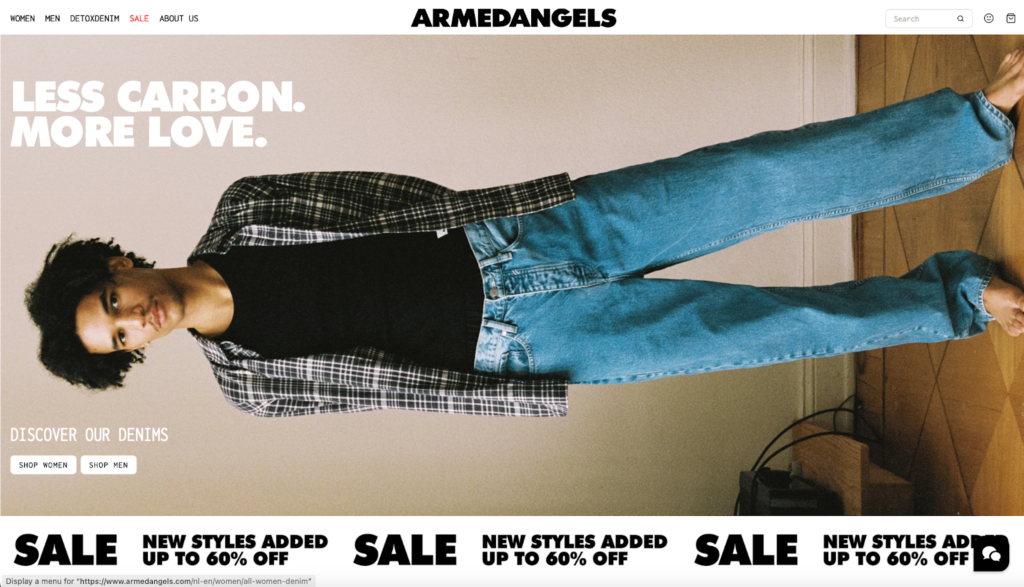
“So starting out with the humble tee, we took our oath against wage slavery, chemical shortcuts, and mass-producing pure crap, and transformed ourselves into one of the first clothing brands in all the land to put people and planet first.”
ARMEDANGELS
🌎
How do they ensure their sustainability?
ARMEDANGELS ensures sustainability by reducing carbon footprints while enabling people to change lifestyles to fight climate change. The brand innovates to cut down carbon emissions in their supply chain, starting with sourcing a high proportion of eco-friendly materials. Specifically, they use GOTS-certified organic cotton fabrics, GRS-certified recycled fabrics, GOTS-and RWS-certified organic wool fabrics, and FSC/PEFC-certified wood-based fabrics including lyocell, modal, and viscose by Lenzing. Additionally, ARMEDANGELS chooses materials with the lowest carbon footprint possible, for example, opting for wood-based fabrics over silk or natural fabrics over fossil-based synthetic fabrics while increasing recycled content, such as recycled wool and recycled cotton. For example, within a year, the share of recycled cotton in their DetoxDenim jeans increased from 5% to 37%, with some jeans in the collection containing 100% recycled cotton. Lastly, ARMEDANGELS’s efforts to encourage lifestyle change include care and repair guides to keep garments longer in circulation. They also have a resale platform that facilitates traded-in to be sold again as second-hand clothes or recycled as fibers for new clothes.
🌐
How do they ensure their ethics?
ARMEDANGELS ensures their ethics by only working with trusted partners to deliver decent wages and workers’ safety. They directly and actively monitor all their suppliers and the suppliers’ nominated subcontractors via on-site and online Internal Due Diligence Check and Self-Assessment, external audits by Fair Wear Foundation (FWF), Global Organic Textile Standard and third-party audits, continuous support, and tailored training programs by third parties. ARMEDANGELS ensures payment of a living wage in part of their supply chain and pays a markup where they notice wage issues via the living wage project. Most importantly, they are fully transparent about the journey from raw material to their products, especially where people and animals are involved, and the impacts of their actions.
🤝
Are they part of any giving-back programs?
ARMEDANGELS raises funds by donating part of their sales tosupport various organizations and campaigns. For example, during the COVID-19 pandemic, they have raised €745.800 ($790,883.61 USD) for Doctors Without Borders, facilitating isolation wards, COVID-19 clinics, and protective clothing for medical professionals worldwide. Other fundraising projects include supporting the climate movement with German Zero and the Climate Emergency Fund, fighting for equality with UN Women, advocating for fair payment and safe working conditions for Bangladeshi garment workers with the National Garment Workers Federation, and rescuing refugees in the Mediterranean Sea with Sea-Watch.
🛍️
What is their product range?
- Best for: kidswear, menswear
- Product range: denim jeans, jackets, jumpsuits, shorts, skirts, T-shirts
- Price range: $$
- Size range: XS–XXL
Mara Hoffman: Womenswear Brand Promoting Mindful Fashion Habits
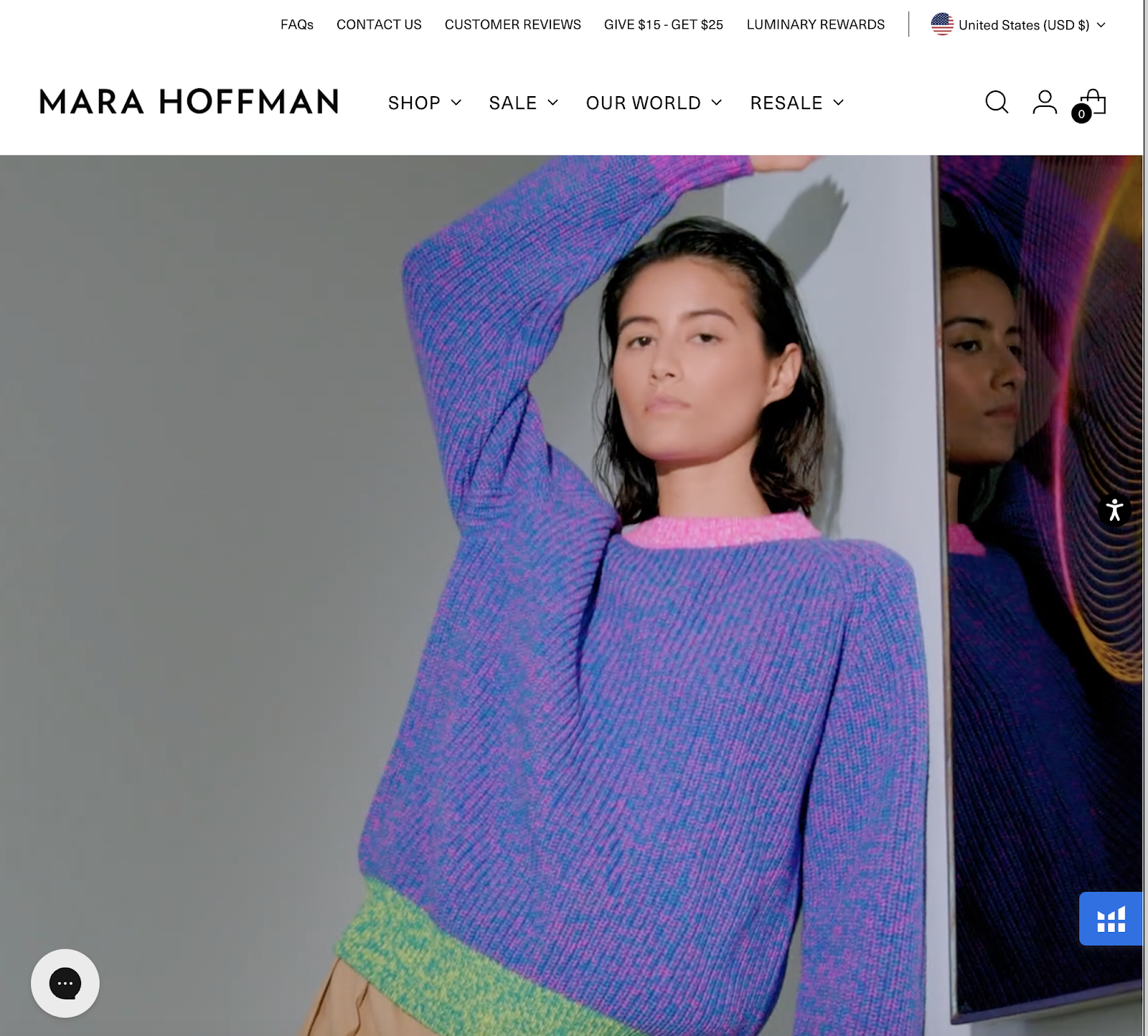
“As a team, we remain committed to reducing our footprint on the planet by extending the life of each garment, contributing to the regeneration of the environment, and advocating for the communities least responsible for, yet most impacted by, climate change.”
Mara Hoffman
🌎
How do they ensure their sustainability?
Mara Hoffman’s sustainability efforts focus on responsible materials, low-impact manufacturing practices, and mindful fashion habits. When sourcing for their designs, they prioritize natural, recycled, and organic materials over virgin synthetic fabrics while opting out of fur, leather, and feathers. Specifically, their modal fabrics are sourced from top-ranking man-made fiber producers on Canopy’s Hot Button Report, Lenzing and Birla Cellulose, while their lyocell fabrics are made by Lenzing and the circular fashion brand Circ. Additionally, their packaging is free from plastics and uses natural materials that can be easily recycled. Since 2019, they have transitioned into 100% recycled paper mailers for small shipments. Regarding the manufacturing stage, Mara Hoffman aims to minimize waste and energy usage wherever possible. For example, they choose digital printing to reduce fabric waste and water waste. Lastly, they encourage mindful fashion habits such as “Wear More, Wash Less“, repairing, and repurposing to keep garments lasting a long time while reducing the climate impact. They also have a platform, Full Circle Marketplace, where you can buy and sell pre-owned Mara Hoffman garments.
🌐
How do they ensure their ethics?
Mara Hoffman works with Fair Trade Certified™ products and factories to ensure workers receive premium work payment. Additionally, they regularly conduct in-person factory visits. They also support the growth of smaller factories with incentives like sponsoring website development and delivering training programs on transparent record-keeping. For transparency, they publish the list of the Tier 1 factories where the last stage of production happens.
🤝
Are they part of any giving-back programs?
As Mara Hoffman has shifted toward sustainability, they have increased contributions to and participation in social justice movements. They give back in various ways, including sponsoring, fundraising, and mentoring, in partnership with many organizations working towards social justice and sustainability. The list includes Black in Fashion Council, CanopyStyle, Equality Now, Woman March, and Sweet Freedom Farm.
🛍️
What is their product range?
- Best for: womenswear
- Product range: dresses, tops, blouses, pants, skirts, swimwear, jumpsuits, playsuits, bodysuits, plus-size
- Price range: $$$
- Size range: XS–XXXL
LA Relaxed: Garments Ethically Designed and Made in LA
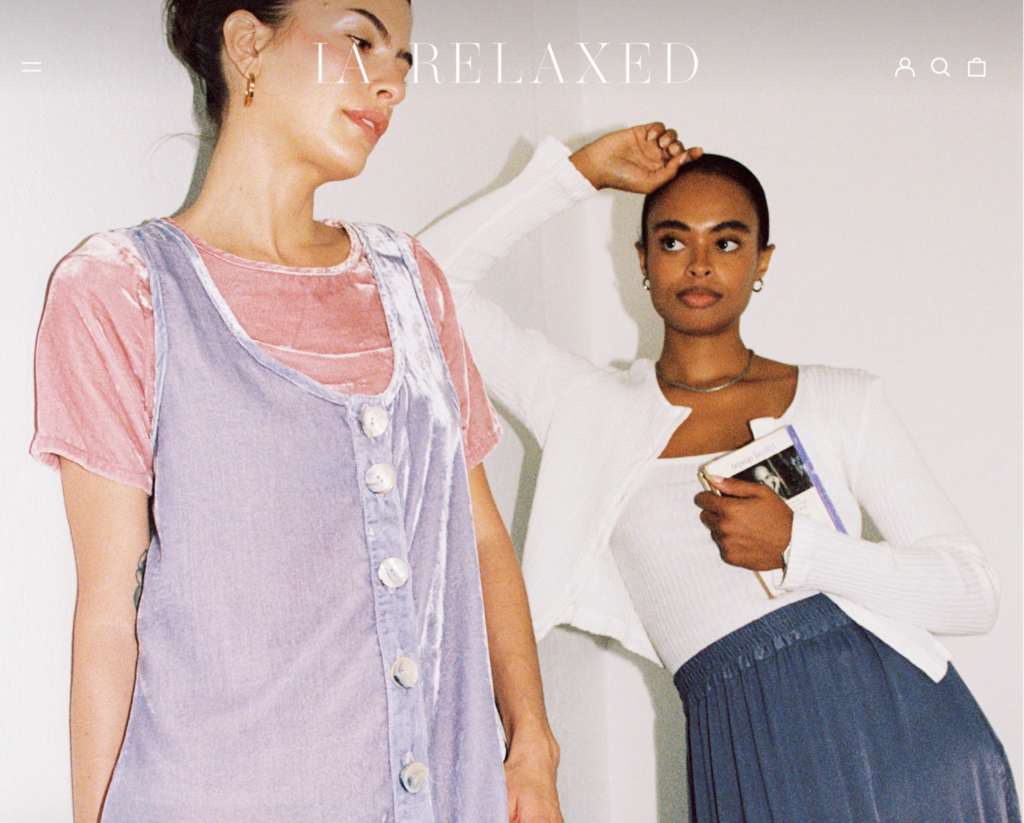
“We measure our impact in footsteps, not a footprint and assemble each garment in under one hundred footsteps.”
LA Relaxed
🌎
How do they ensure their sustainability?
LA Relaxed ensures sustainability by sourcing natural and non-toxic fibers and dyestuffs, manufacturing locally, and minimizing textile and plastic waste. They use a high proportion of eco-friendly textile materials, including GOTS-certified organic cotton, linen, and TENCELTM Lyocell. Their fabrics are dyed at Bluesign®-certified local dye houses, using low-impact and non-toxic dyes. Furthermore, LA Relaxed sources most of their materials within a 10-mile radius and has their clothes designed, cut, and sewn under one roof (within 100 footsteps, to be specific). Sourcing and manufacturing locally reduces the transporting distances, resulting in a relatively low carbon footprint. Lastly, the brand minimizes textile and plastic waste by sourcing deadstock fabrics, having a limited production run, and using no plastics in packaging products or shipping supplies. Specifically, all LA Relax’s products are tagged, packed, and shipped using recycled paper-based materials or biodegradable glassine. Their hangtags and labels are a mix of linen, recycled composite, and paper.
🌐
How do they ensure their ethics?
LA Relaxed has a Code of Conduct that covers all of the ILO’s Fundamental Freedoms principles. They trace most of their supply chain and ensure payment of a living wage in the final stage of production. Since 2016, they have paid living wages, offered on-the-job training programs, and been committed to a safe and fair environment.
🤝
Are they part of any giving-back programs?
LA Relaxed donates garments to local charities.
🛍️
What is their product range?
- Best for: womenswear
- Product range: tops, bottoms, dresses, accessories
- Price range: $$
- Size range: XS–XL
Neu Nomads: An Ethic-First Brand With a Commitment to Sustainability and Traceability
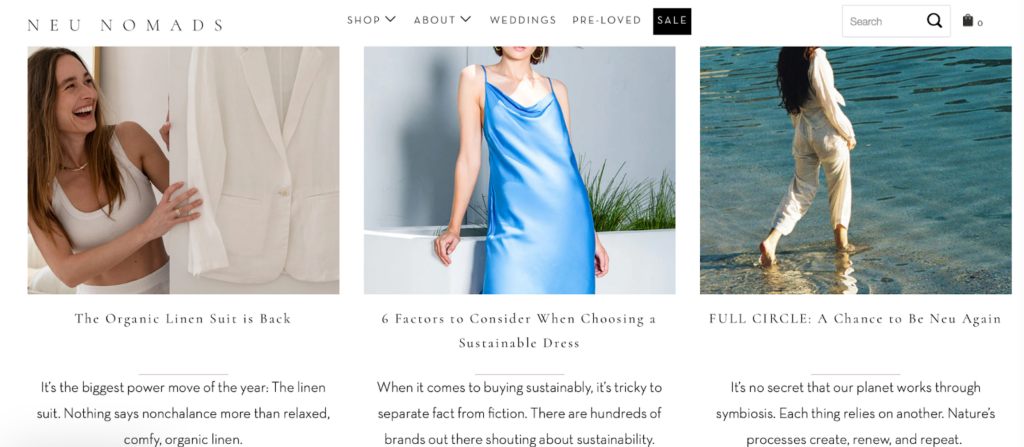
“We always consider how to create something beautiful with the lowest possible impact on the world.”
Karen Wood, founder of Neu Nomads
🌎
How do they ensure their sustainability?
Neu Nomads prioritizes sustainability by opting for eco-friendly materials, using renewable energy in their supply chain, and reducing waste with a platform to resell and reuse pre-loved clothes. Their biodegradable, plant-based fabrics include linen, certified organic cotton, and TENCEL™ (lyocell fabrics produced by Lenzing). Their factory in India is powered by solar energy, with all the excess energy directed back to the local community. Water used for dying fabrics is captured, purified, and processed using non-toxic and AZO-free dyes. Nearly 90% of the water used during dyeing is recycled in a common effluent treatment plant.
🌐
How do they ensure their ethics?
Neu Nomads ensures their ethics through fair labor practices and transparent supply chains. They also make regular inspection visits to their suppliers. 85% of their garments are produced in a family-owned factory in Delhi that maintains healthy working conditions, healthcare benefits, and compensation far above the living wage.
🤝
Are they part of any giving-back programs?
Neu Nomads is not known to be part of any giving-back programs.
🛍️
What is their product range?
- Best for: luxurious essential clothing items for female modern travelers
- Product range: shirts, scarves, dresses, pants, jackets, blazers, knitwear, tops, blouses, T-shirts, lingerie
- Price range: $$$
- Size range: XXS–XXL
Ecoalf: Committing to Recycling Waste and Cleaning the Environment

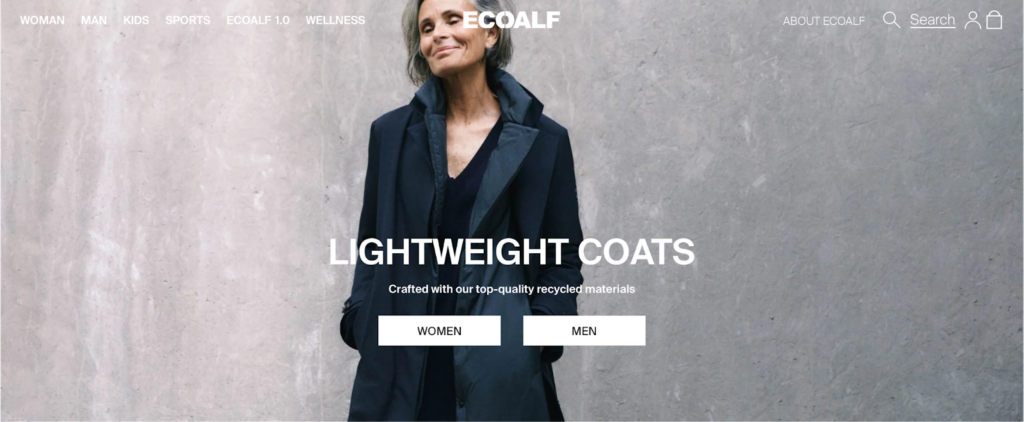
“I believe the time when fashion was just about looking good is over. More than ever it has to be about doing what is right and feeling good about it.”
Javier Goyeneche, founder of Ecoalf
🌎
How do they ensure their sustainability?
Ecoalf’s commitment to sustainability is evident in their innovative recycling practices. They minimize the use of natural resources by using mainly waste as raw materials, collecting and transforming discarded materials such as plastic bottles, discarded fishing nets, and post-industrial cotton into high-quality fashion items. In 2023, they launched their first 100% recycled cotton collection that can be recycled again to achieve circularity. In 2021, 74% of the materials used by Ecoalf were recovered from waste, saving 1,377 tons of CO₂. In combination with recycled fabrics, including mechanically recycled cotton, recycled wool, recycled polyester, and recycled nylon, Ecoalf also sources some low-impact materials, such as natural fabrics (linen, hemp, kapok) and semi-natural fabrics, including ECOVERO™ viscose. Ecoalf is also Bluesign® and B Corporation certified.
🌐
How do they ensure their ethics?
Ecoalf ensures their ethics by protecting their workers and the environment. In particular, they ensure there are safe and fair working conditions in their supply chain by mandating a Code of Conduct, an Equality Scheme, a Crime Prevention Handbook, a Disciplinary System, and a Bullying at Work Protocol. Additionally, they run many campaigns to raise awareness of the state of our ocean and earth-damaging consumerism habits.
🤝
Are they part of any giving-back programs?
Ecoalf actively participates in giving-back programs. The Ecoalf Foundation was founded to clean the oceans of marine waste with the help of the fishing industry while giving a second life to plastic waste through recycling and closing the loop. They achieve that with their “Upcycling the Oceans” projects. In 2021, Ecoalf donated 10% of all Because There’s No Planet B sales to the Ecoalf Foundation to expand the “Upcycling the Oceans” project beyond the Spanish border and into countries like Thailand, Greece, and France. The foundation also partners with Biotherm to set up the framework of “Limpia ríos, salva océanos”, a project supported by corporate volunteer days to collect waste and restore the environment. Additionally, Ecoalf’s employees volunteer in various environmental incentives.
🛍️
What is their product range?
- Best for: womenswear, menswear, kidswear
- Product range: shirts, pants, jackets, blazers, hoodies, sweatshirts, tops, blouses, knitwear, T-shirts, sneakers, accessories
- Price range: $$
- Size range: XS–XL
Encircled: Minimalist Clothing Essentials Made Without Compromising Style, Comfort, or the Planet

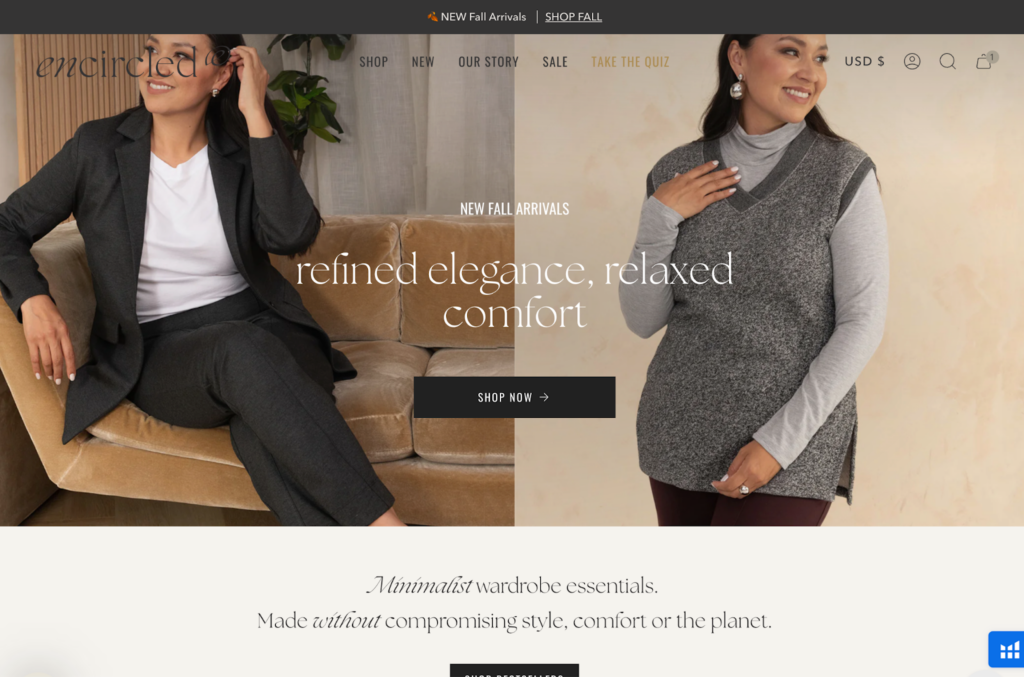
“Ethically made from the finest, most soft and flattering eco-friendly fabrics, our collection is designed with intention, flexibility and exceptional fit at its heart.”
Kristi Soomer, Founder of Encircled
🌎
How do they ensure their sustainability?
Encircled prioritizes sustainability through minimizing waste and maximizing options. They are vigilant about closing gaps in the supply chains and the life of each piece of clothing. Their sewing studios upcycle all scrap fabrics into accessories, putting them up for quarterly sales. Encircled Renewed Threads is a platform where you can find pre-loved items. It is also possible to buy, sell, or trade Encircled clothes on their Facebook community page. Other environmental incentives include using green energy to power their office and host their website, FSC-certified and eco-friendly paper and cleaning products, and 100% recyclable packaging. Encircled manufactures their products locally and spends at least 50% of their non-labor expenses at local independent suppliers to reduce their carbon footprint. Lastly, they prioritize natural fabrics, such as organic cotton and linen, and low-impact, plant-based semi-natural fabrics, such as TENCEL™ Lyocell, TENCEL™ Modal, and LENZING™ ECOVERO™.
🌐
How do they ensure their ethics?
Encircled puts ethics at the core of their operations. Their final stage of production is undertaken in Canada, a low-risk country for labor abuse. They uphold each factory in their supply chain to an Ethical Code of Conduct checklist, exceeding what the law requires. Encircled alsovisits their international suppliers regularly. Lastly, they advocate continuously for diversity and inclusion.
🤝
Are they part of any giving-back programs?
Encircled is not known to be part of any giving-back programs.
🛍️
What is their product range?
- Best for: womenswear
- Product range: skirts, dresses, pants, jackets, blazers, knitwear, tops, blouses, T-shirts, stockings, tights, jumpsuits, playsuits, accessories, plus-size
- Price range: $$$
- Size range: XS–XXL
Whimsy + Row: Reducing Eco-Footprint With Every Step of the Process
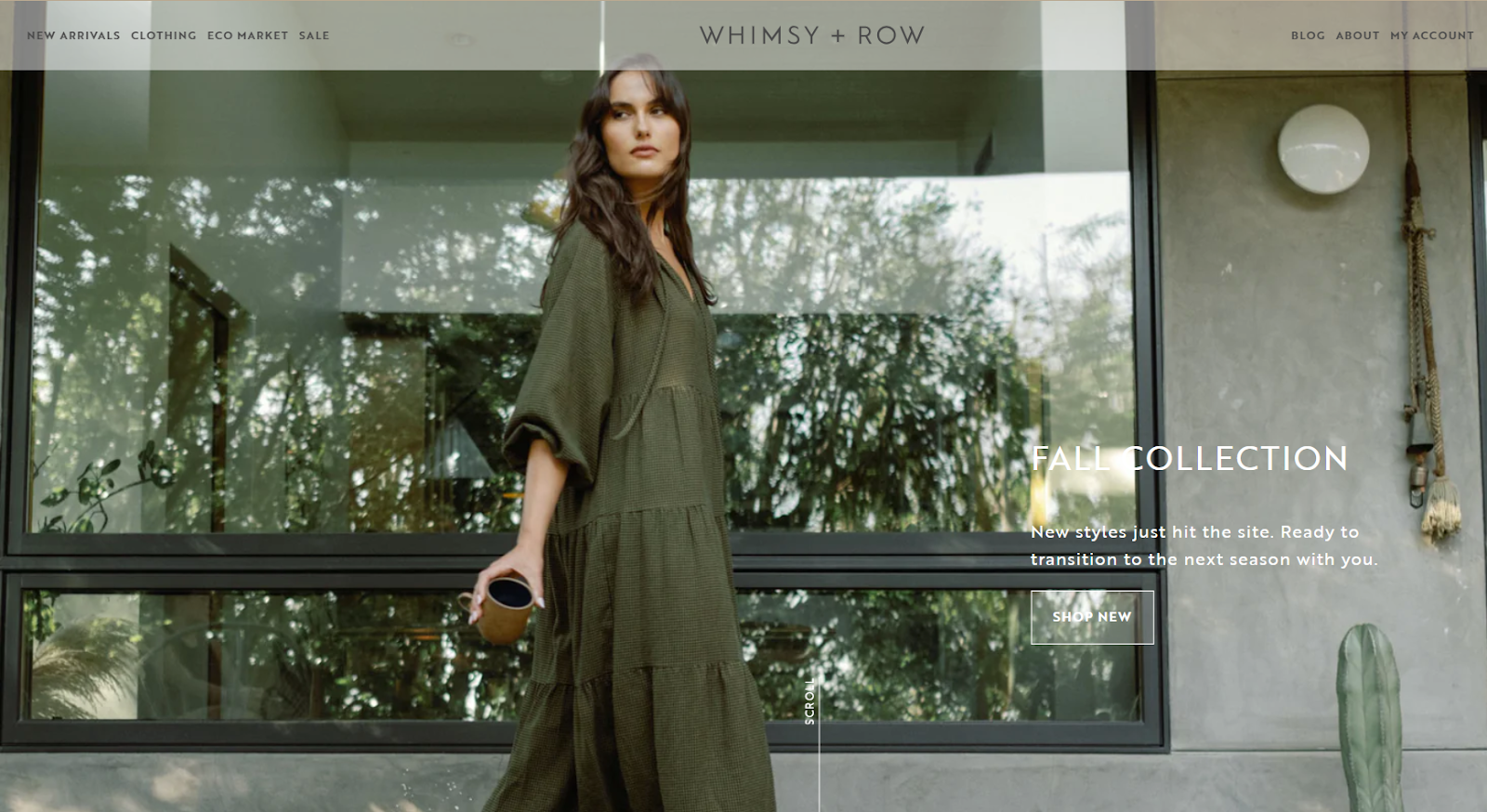
“Growing and being a good company.”
Rachel Temko, founder of Whimsy + Row
🌎
How do they ensure their sustainability?
Whimsy + Row prioritizes sustainability by opting for low-impact materials like lyocell, modal, and viscose trademarked by Lenzing, certified organic cotton, linen, and deadstock/upcycled fabrics. Their clothes are made with low-impact dyes and recycled water. Furthermore, they reduce waste through their small-batch production of long-lasting products and efforts to close the loop to reach zero waste. The final stages of manufacturing are done locally to reduce the transportation footprint. They further offset their carbon emission with the Carbon Fund. Whimsy + Row is carbon neutral.
🌐
How do they ensure their ethics?
Whimsy + Row clothing is made within a few miles of their office, enabling weekly factory visits. The brand ensures that fair wages are given and that workers are being treated fairly.
🤝
Are they part of any giving-back programs?
Whimsy + Row actively participates in giving-back programs that support environmental causes and community initiatives. Specifically, they donate money to organizations like One Tree Planted, People Tree, Global Fund for Women, Black Lives Matter, Reclaim the Block, Black Vision Collective, Downtown Women’s Health Center, and Feeding America. Once a month, their employees also donate their time to community work, such as cleaning the beach or planting trees.
🛍️
What is their product range?
- Best for: womenswear with eco-friendly, contemporary designs
- Product range: skirts, denim, dresses, pants, tops, blouses, shorts, lingerie, plus-size
- Price range: $$$
- Size range: XS–3XL
Organic Basics: A Carbon Neutral Brand Creating Underwear, Activewear, and Everyday Essentials

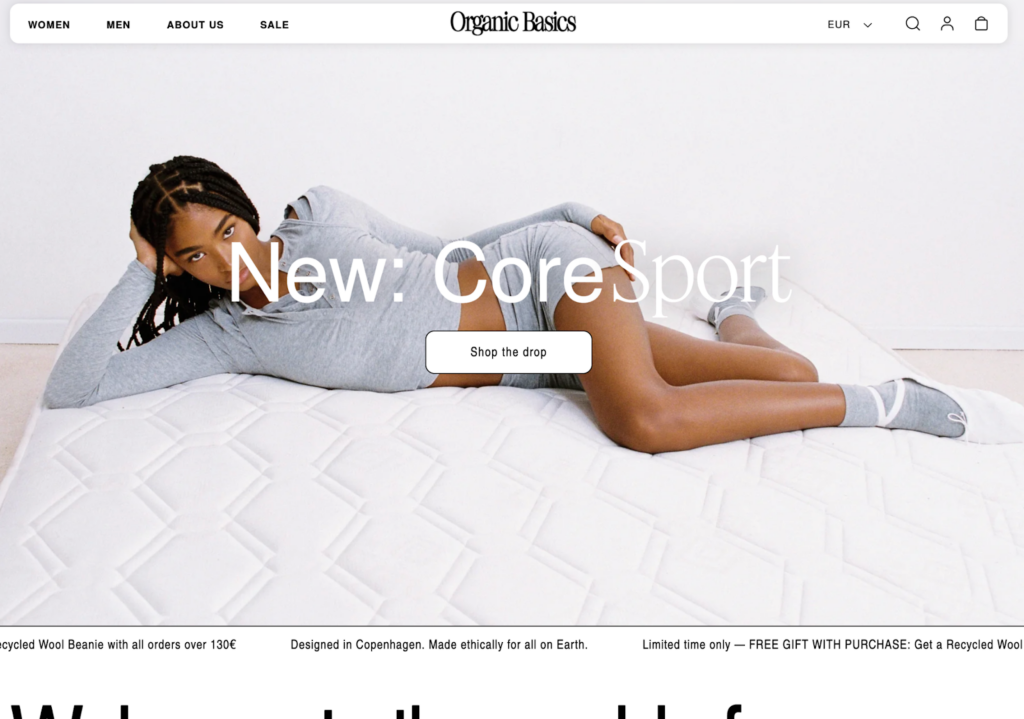
“We make our basics to be both Earth- and people-friendly — carefully choosing materials and fabrics that care for our environment, only partnering with factories that consider their impact too, and designing all the basics for all bodies.”
Organic Basics
🌎
How do they ensure their sustainability?
Organic Basics promotes sustainability by choosing fabrics based on their environmental footprint and lifetime durability. Their clothes are made exclusively with natural fabrics (organic cotton certified by the Global Organic Textile Standard), low-impact textiles (TENCEL™ lyocell certified by the STANDARD 100 by OEKO-TEX®), or recycled materials (recycled nylon certified by the Global Recycling Standard). They use a small percentage of elastane in some garments to extend the products’ longevity, which ultimately extends the lifespan. Organic Basics is fully transparent about the impact of their products, enabling consumers to understand their share in using the clothes. Organic Basics partners with Made2Flow, which calculates their emissions, and One Carbon World, which helps them reduce and offset all their emissions. Finally, they are also a B Corporation.
🌐
How do they ensure their ethics?
Organic Basics works only with trusted, certified factory partners, who ensure that their workplace is free of child labor and forced labor and that their workers enjoy a safe working space, earn a living wage, and benefit from employee perks like free lunches and childcare. They show full transparency of the location and practices in their factories. Organic Basics also audits or visits most of their suppliers.
🤝
Are they part of any giving-back programs?
Organic Basics donates 1% of the value of all orders to sustainable projects. Their partnership with Beam Impact enables consumers to choose where their 1% donation will go, at no extra cost to the consumers, to support local charities that help Nature Conservation, Ocean Conservation, Rewilding, or Sustainability & Gender Equity.
🛍️
What is their product range?
- Best for: womenswear, menswear
- Product range: underwear, bras, bottoms, T-shirts, tops, sweatshirts, hoodies, knitwear dresses, swimwear, socks, plus-size
- Price range: $$$
- Size range: XXS–XXL
Toad&Co: Made-to-Order Clothes Using Highly Sustainable Materials
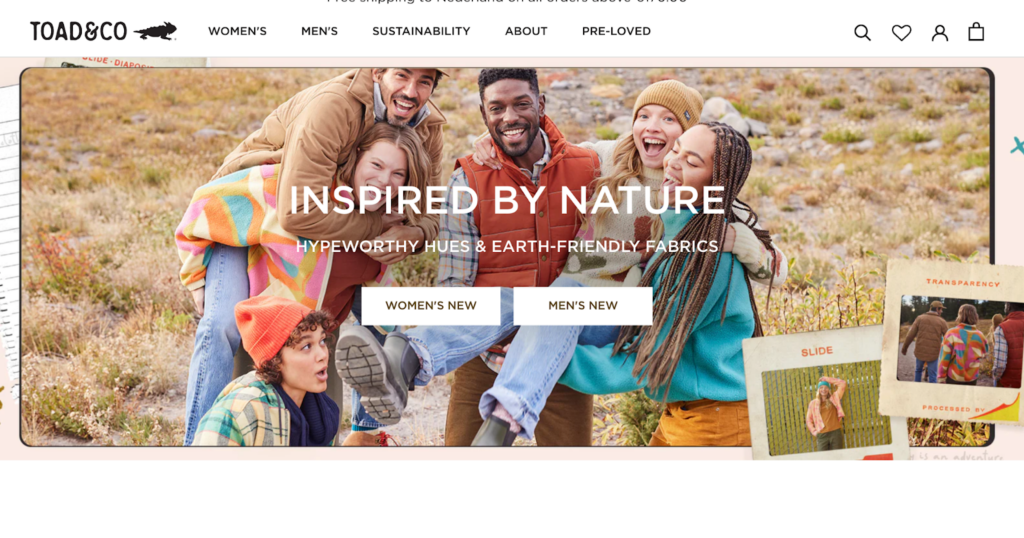
“Our commitment to a cleaner way of living and doing business has made us stronger and, like any good relationship, we take every day as it comes.”
Toad&Co
🌎
How do they ensure their sustainability?
Toad&Co promotes sustainability by sourcing eco-friendly materials, reducing carbon footprints, supporting textile circularity, and joining the responsible packaging movement. 100% of Toad&Co clothing is made with a minimum of 80% sustainable fibers and/or fabrics that have met Earth-friendly standards in accordance with Bluesign® or Standard 100 by OEKO-TEX®. They use organic cotton, recycled fabrics, hemp, lyocell, and modal. Furthermore, they purchase Renewable Energy Certificates (RECs) for all Toad&Co locations to offset their energy use by supporting the development of emission-free renewable energy and carbon reduction projects. The ToadAgain platform enables reselling and buying pre-loved items to reduce waste and extend the lifespan of clothing items. Additionally, Toad&Co provides resources for consumers to mend and extend the usage of their clothes.
🌐
How do they ensure their ethics?
Toad&Co is committed to promoting fair labor practices and safe working conditions in all factories in their supply chain. Their manufacturers are held to Toad&Co’s Workplace Code of Conduct to provide employees with a sustainable work environment. Their Code of Conduct covers four of the ILO’s Fundamental Freedoms principles. They also visit vendors’ facilities on a yearly basis to ensure that their clothes are produced with integrity. In 2010, Toad&Co was named one of Outside Magazine’s best places to work.
🤝
Are they part of any giving-back programs?
At the very beginning of their journey, Toad&Co co-founded Planet Access Company, which employs adults with disabilities, fostering inclusivity and diversity in the workforce. Additionally, they run programs that support people with disabilities to make arts and enjoy outdoor adventures. They also give 1% of all sales to environmental causes via 1% for the Planet membership. In the last 20 years, they have helped to fund 120 environmental protection organizations.
🛍️
What is their product range?
- Best for: menswear, womenswear
- Product range: shirts, sweaters, dresses, pants, maternity wear, T-shirts, shorts, underwear
- Price range: $$
TAMGA Designs: Luxurious, Lightweight, and Forest-Friendly Clothing
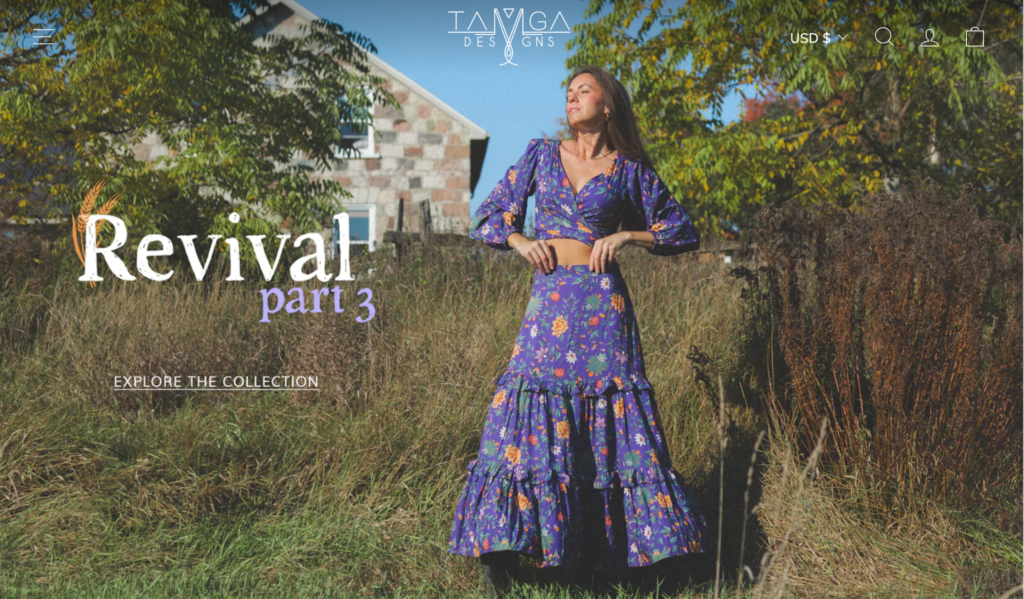
“We believe in a bright future for our planet, which is why we only use fabrics made from traceable and sustainable botanic fibers. ”
TAMGA Designs
🌎
How do they ensure their sustainability?
TAMGA Designs ensures sustainability by lowering their environmental impacts throughout the life-cycles of their clothes. In the material sourcing stage, they use only 100% biodegradable and recyclable fabrics, including low-impact, certified, traceable wood-based fabrics (lyocell, modal, viscose) from Lenzing and European-original linen. To manufacture their colorful collection, TAMGA Designs opts for OEKO-TEX® STANDARD 100-certified dyes that use 70% less water than conventional synthetic dyes. Each finished product is packed in an unbleached GOTS-certified organic cotton tote bag that can be reused for traveling or home storage. Other packing elements are made with recycled, recyclable, or compostable materials. TAMGA Designs also uses the leftover fabric from previous collections to create the “Revival” collection. Lastly, they offset all carbon emissions to make their garments carbon-neutral. In 2022, through their partnership with SimpliZero, TAMGA Designs invested in Gold-Standard offsetting projects, including the Sirap Wind Farm in Indonesia, a Bundled Wind Power project in China, and a Clean Drinking Water project in Cambodia.
🌐
How do they ensure their ethics?
TAMGA Designs ensures their ethics by sharing every supplier that touches a TAMGA garment, from “field to fashion.” Their direct suppliers are upheld to a Code of Conduct that covers all of ILO’s Fundamental Freedoms principles. They visit most of their suppliers regularly.
🤝
Are they part of any giving-back programs?
Since their inception, TAMGA Designs has always given back a portion of their sales to causes they care about. Through their partnership with 1% for the Planet, they give 1% of the annual sales to the Sumatran Orangutan Society (S.O.S.). The fund is used to replant the rainforests in Sumatra, restoring one of the world’s most important biodiversity hotspots and bringing back the habitat for four critically endangered species, including orangutans, rhinos, elephants, and tigers. Additionally, they have a special t-shirt collection made with Lenzing’s viscose fabrics, Trees Please Tee, for which they contribute $10 per every sold item to S.O.S. In 2022, they celebrated Forest-Friendly-Friday and International Orangutan Day, donating 20% and 25% of all sales, respectively, to the Sumatran Orangutan Society.
🛍️
What is their product range?
- Best for: womenswear, kidswear
- Product range: skirts, shirts, dresses, pants, tops, blouses, shorts, jumpsuits, playsuits, T-shirts, kimonos, loungewear, accessories, plus-size
- Price range: $$$$
- Size range: XS–XXL
Baukjen: Womenswear Designed for Circularity and Made Sustainably
“Our collections are designed for the modern woman struggling with a busy lifestyle. Effortless style is our design signature, premium quality is our standard so our clothes can be worn year after year.”
Baukjen
🌎
How do they ensure their sustainability?
Baukjen ensures sustainability by swapping planet-unfriendly materials for more responsible ones, cutting down impacts throughout their supply chain, and moving towards a circular model. They lower their impact and contribute to a circular materials economy by increasing the proportion of recycled fibers (Ecotec recycled cotton, recycled sheep wool, recycled cashmere, Newlife recycled polyester, recycled down) and regenerative fibers. For example, in the second quarter of 2023, 98.6% of the materials used were from responsible sources with traceable origins, while 98.2% of the fibers used have a proven lower environmental impact. Specifically, their viscose fabrics, which account for 40% of Baukjen and their sister brand Isabelle Oliver’s 2022 collections, are sustainably and ethically sourced, either from Ecojilin viscose, which is made of pre-consumer recycled cotton fibers instead of virgin wood, using significantly less energy and water in the process while avoiding cutting down trees, or from LENZING™ ECOVERO™, Canopy’s top ranking viscose. Further down the life-cycle in the manufacturing stage, they continue to lower the impacts by reducing water usage, using 100% renewable energy in offices and warehouses to decrease their carbon footprint, and minimizing manufacturing waste. For example, the water consumption and carbon emissions in the second quarter of 2023 were 47% and 31% lower than the same quarter in 2020, respectively. Baukjen is also a Zero Waste business, meaning that over 90% of their “waste” is neither landfilled nor incinerated. Once finished, their garments are shipped in 100% plastic-free, recyclable, and biodegradable packaging made from a recycled paper mix certified by FSC or PEFC. Lastly, Baukjen strives towards circularity through their re-commerce initiatives: Pre-Loved, Rental, and Care and Repair.
🌐
How do they ensure their ethics?
Baukjen ensures their ethics by maintaining a high level of transparency regarding their factories and the impacts of their garments. They share the list of their factories, from Tier 1 to Tier 3 suppliers. Their Code of Conduct, signed by all direct suppliers (Tier 1) and some indirect suppliers (Tier 2), covers all of ILO’s Fundamental Freedoms principles. They visit their factories regularly and enforce third-party audits. Additionally, they offer insights into the sustainable attributes of each item in their collection, such as the impact, the traceability, the carbon emission, or the nature of the fibers used.
🤝
Are they part of any giving-back programs?
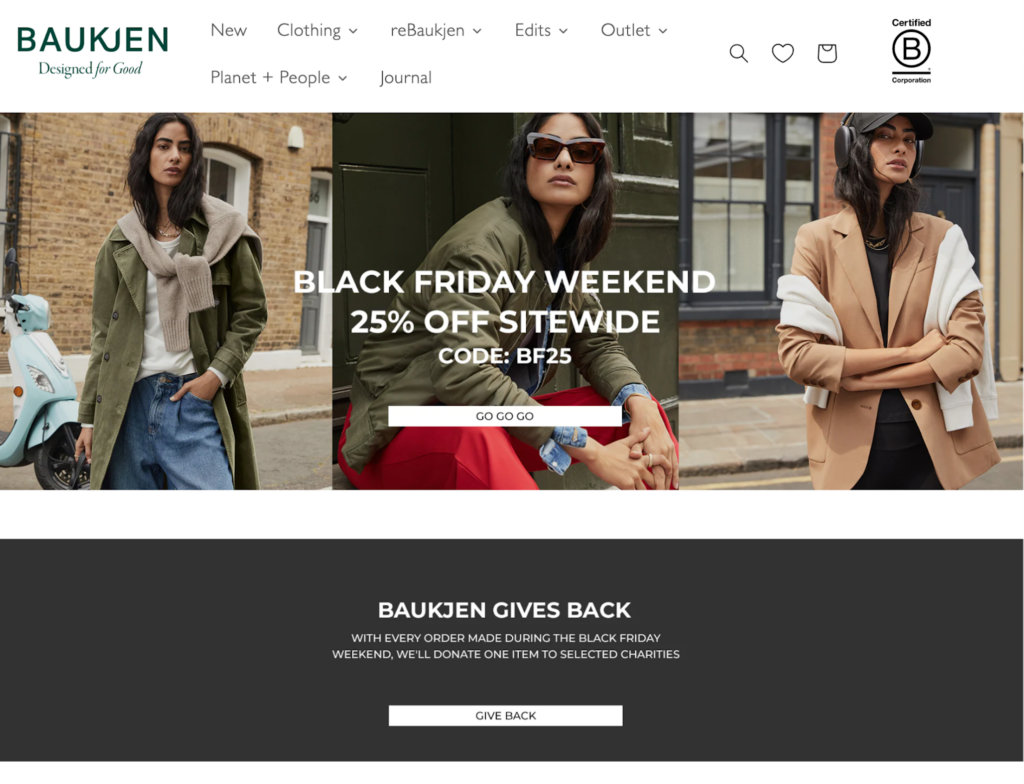
Baukjen gives at least 10% of their annual profits to charities, including NHS Charities Together, GOSH, Oxfam, Strut Safe, World Land Trust, Prince’s Trust, and Birth Companions. Their team is offered two days per year to volunteer at charities of their choice. For three years running, they swapped deals for good deeds over the Black Friday Weekend, opting instead to donate profits or clothing over the four-day shopping bonanza to a range of deserving charities, such as the UK women’s charity Smart Works.
🛍️
What is their product range?
- Best for: womenswear
- Product range: shirts, blouses, sweatshirts, cardigans, dresses, tops, jackets, blazers, outerwear, T-shirts, vests, jeans, pants, skirts, knitwear, jumpsuits, joggers, pajamas, underwear, tights, maternity wear
- Price range: $$
- Size range: XS–XX
Threads 4 Thought: Everyday Basics Produced Responsibly
“From our original designs to our fabrics to the factory floor, we are committed to leaving an innately smaller impact on our planet.”
Threads 4 Thought
🌎
How do they ensure their sustainability?
Threads 4 Thought promotes sustainability by sourcing a high proportion of eco-friendly materials including recycled polyester, organic cotton, and modal with Lenzing’s renewable beech tree pulp. Further down the life-cycle in manufacturing, they lower their environmental impacts by implementing a dye technology that eliminates all harmful chemicals and reduces water usage during the dyeing process by 95%. They also recycle 80% of their main factory’s industrial wastewater. Additionally, their packing materials are fully FSC-certified, with 90% being WaveBags, which are 100% recyclable, water resistant, and strong. Lastly, 99% of their products are transported by boat rather than air, reducing carbon emissions during the transportation stage.
🌐
How do they ensure their ethics?
Threads 4 Thought traces most of their supply chain and reduces their impact through Greenstory. They have a Supplier Code of Conduct that covers all of ILO’s Fundamental Freedoms.
🤝
Are they part of any giving-back programs?
Threads 4 Thought partners with the International Rescue Committee to help people displaced due to conflicts.
⚒️
What they do:
- Best for: menswear, womenswear, kidswear
- Product range: sweaters, dresses, pants, jackets, blazers, shorts, hoodies, T-shirts, tops, blouses, maternity wear, stockings, tights, jumpsuits, playsuits, sportswear, sleepwear, accessories, plus-size
- Price range: $$
- Size range: XS–XXL
Wood-Based Fabrics: Biodegradable Textile Materials Made With Renewable Resources
Wood-based fabrics can be highly sustainable when durable, breathable, and biodegradable textiles are made with wood from sustainably managed forests in a closed-loop system. Lyocell is considered the most sustainable type of wood-based fabric, especially when made with some recycled content, such as in the case of TENCELTM Lyocell x REFIBRA™.
Here are the life-cycle stages of wood-based fabrics and each stage’s sustainability assessment:
- Sourcing of wood-based fabrics: The sourcing stage is generally sustainable. This is largely thanks to the carbon sequestration potential of trees. Also, wood-based fabrics are made from renewable plant materials, especially when the wood comes from fast-growing, low-input tree species in well-managed forests or farms. However, there are legitimate concerns over the traceability of timber and the association between sourcing plant material to make textiles and deforestation in ancient and endangered forests.
- Manufacturing of wood-based fabrics: Manufacturing wood-based fabrics is generally unsustainable, though there are some exceptions. Wood-based fabric production is typically energy and chemical-intensive. This can have serious knock-on ecological impacts, especially if fossil fuels are the main energy sources at the manufacturing locations. However, integrated and closed-loop manufacturing processes can recover part of the energy during production while optimizing materials.
- Transportation of wood-based fabrics: Transporting can be a carbon-intensive stage in the life-cycle of items made with wood-based fabrics. This is because of the emissions associated with transporting and delivering vehicles. Wood-based fabrics typically travel from forests, where raw materials for wood-based fabrics are grown, to processing factories, then sorting centers, shops, and consumers’ homes before going to recycling centers or landfills.
- Usage of wood-based fabrics: Using wood-based fabrics is generally sustainable. Because these fabrics are made with cellulose fibers, they don’t shed microplastic during the usage stage. Some wood-based fabrics, such as lyocell and modal, are breathable and durable—two telltale signs of sustainability.
- End-of-life of wood-based fabrics: The end-of-life stage for wood-based fabric is generally sustainable because it is reusable, biodegradable, and compostable.
Not all wood-based fibers are made equally. The sustainability of wood-based fabrics depends largely on the origin of the cellulose fibers and the use and disposal of process chemicals.
Why Is It Important to Buy Products Made of More Sustainable Fabrics
It is important to buy products made of more sustainable fabrics because a sustainable textile industry has a lower carbon footprint, helps save natural resources, and is better for forests, animals, and humans.
Buying Sustainable Fabrics Reduces Your Carbon Footprint
The production of clothing and footwear is estimated to contribute 10% of global greenhouse gas emissions—more than all international flights and shipping combined. If the fashion industry were a country, it would be the fourth largest emitter of carbon dioxide.
One way to reduce the carbon footprint of the clothes you buy is to opt for sustainable fabrics. Sustainable fabrics, which are often made with natural or recycled fibers, have relatively low carbon footprints compared to petroleum-based fabrics. For example, organic cotton made in the US has a carbon footprint of 2.35 kg CO2 (per ton of spun fiber) – a quarter of polyester’s carbon footprint.
Buying Sustainable Fabrics Reduces Demand For Natural Resources and Waste Management
The textile industry uses water and land to grow Rayon and other fibers. It is estimated that 79 billion cubic meters of water were used for the sector worldwide in 2015. For example, producing a single cotton T-shirt requires as much water as one person drinks for 2.5 years (2,700 liters of fresh water).
Worse yet, the textile economy is vastly more linear than circular: the largest amount of resources used in clothes ended up in landfill (instead of being recycled to remake clothes). According to a report by the Ellen MacArthur Foundation,
- Less than 3% of materials used in the textile economy in 2015 came from recycled sources.
- In other words, more than 97% of resources used in making clothes are newly extracted.
When clothing items are disposed of within a short period of time—under a year in the case of half of the fast fashion clothes—the natural systems that provide raw materials for fabrics don’t have enough time to recover and regenerate, which could lead to ecological breakdown.
Sustainable fabrics are made with less water and emissions while lasting longer:
- Because they are durable, you don’t need to buy new clothes too often.
- Thus, you help reduce the pressure to extract more resources for making new items.
Similarly, making and consuming sustainable fabrics made with recycled materials reduces the demand for virgin materials while helping tackle waste management.
Buying Sustainable Fabrics Encourages Sustainable Management of Forests
Sustainable plant-based fabrics are made with raw materials from forests and plantations that are sustainably managed, such as complying with FSC standards.
When you buy sustainable plant-based fabrics, you discourage unsustainable forestry practices like illegal logging. You also help reduce deforestation, biodiversity loss, and the effects of climate change.
Buying Sustainable Fabrics Encourages Fairer Treatment of Animals
The fashion industry is rife with animal mistreatment when it comes to making animal-based fabrics like wool or silk. Every year, billions of animals suffer and die for clothing and accessories.
Buying sustainable vegan alternatives can help to reduce the pressure on raising more and more animals to meet the demand for animal-based fabrics while sacrificing their well-being and lives.
Suppose you have to buy fabrics made with, for example, wool or silk; make sure you only choose brands committed to cruelty-free products. In that case, you help advocate better treatments for animals raised within the textile industry.
Using Sustainable Fabrics Encourages Fairer Treatment of Textile Workers
Recent statistics from UNICEF estimated as many as 170 million child laborers worldwide, many of whom were engaged in some form of work in the textile industry. They don’t get paid minimum wages and often work long hours.
When you buy sustainable fabrics from brands transparent about the working conditions at their factories, you discourage the use of child labor and help promote better working conditions for textile workers.
How Can You Generally Buy More Sustainable Fabrics
The key to sustainably buying fabrics is to check on relevant environmental and original certifications.
For natural fabrics:
- Global Organic Textile Standard (GOTS): A globally-recognized certification system that ensures a certain threshold of organic content has been met. It covers manufacturing, packaging, labeling, transportation, and distribution (but not what happens in the fields where crops are grown).
- USDA Certified Biobased Product: The USDA BioPreferred® Certification is a voluntary certification offered by the United States Department of Agriculture. The certification identifies products made from plants or other renewable materials.
- Ecolabel: Ecolabel is the official European Union voluntary label recognized worldwide for certified products with a guaranteed, independently-verified low environmental impact. The label requires high environmental standards throughout the entire life-cycle: from raw material extraction through production and distribution to disposal. It also encourages companies to develop innovative, durable, easy-to-repair, and recyclable products.
For plant-based semi-natural/semi-synthetic fabrics:
- Forest Stewardship Council: An FSC certification ensures that the wood (or wood-like material) comes from responsibly managed forests that provide environmental, social, and economic benefits.
There are two types of FSC Certification:- FSC Forest Management Certification, with a focus on the origin of the wood—the forest.
- FSC Chain of Custody Certification, which focuses on the path from the forest to the customer’s home.
- Program for Endorsement of Forest Certification: PEFC’s approaches to sustainable forest management are in line with protecting the forests globally and locally and making the certificate work for everyone. Getting a PEFC certification is strict enough to ensure the sustainable management of a forest is socially just, ecologically sound, and economically viable but attainable not only by big but small forest owners.
For recycled fabrics:
- Recycled Claim Standard (RCS): The Textile Exchange RCS was originally developed as an international, voluntary standard that sets requirements for third-party certification of Recycled input and chain of custody.
- The Global Recycled Standard (GRS): The Global Recycled Standard (GRS) is an international, voluntary, full product standard that sets requirements for third-party certification of Recycled Content, chain of custody, social and environmental practices, and chemical restrictions. It can be used for any product with more than 20% recycled material.
For all types of fabrics:
- STeP by OEKO-TEX®: STeP by OEKO-TEX® is an independent certification system for brands, retailers, and manufacturers from the textile and leather industry. It communicates organizational environmental measures, including reducing carbon footprint and water usage.
- OEKO-TEX® Standard 100: OEKO-TEX® labels aim to ensure that products pose no risk to human health (i.e., containing banned chemicals).
Some certifications that are signaling brands’ efforts toward lowered environmental impacts and a circular economy are:
- B Corp Certification: The label B Corp is a certification reserved for for-profit companies. Certified holders are assessed on their social and environmental impacts.
- Cradle2Cradle certification: Cradle2Cradle provides a standardized approach to material circularity. It assesses whether products have been suitably designed and made with the circular economy in mind covering five critical categories: material health, material reuse, renewable energy and carbon management, water stewardship, and social fairness.
Final Thoughts
Conventional viscose and acetate are considered unsustainable because of the harmful chemicals used during manufacturing. However, modal and lyocell fabrics produced in closed-loop systems that recycle and reuse chemicals and water and use traceable cellulose fibers, such as those from Lenzing, have relatively low environmental impacts. Alternatively, upcycled wood-based textile is sustainable, thanks to bypassing the manufacturing process.
By purchasing new or pre-loved wood-based clothes from brands that commit to sustainability, you support their mission to create a fairer and less harmful textile industry for all lives on Earth.
Here is the list (again) of the most sustainable rayon clothing brands:
- Patagonia
- MATE the Label
- Tentree
- ARMEDANGELS
- Mara Hoffman
- LA Relaxed
- Neu Nomads
- Ecoalf
- Encircled
- Whimsy + Row
- Organic Basics
- Toad&Co
- TAMGA Designs
- Baukjen
- Threads 4 Thought
To make your use of these fabrics even more sustainable, follow these steps:
- Buy second-hand, recycled, or upcycled clothes made with wood-based fabrics.
- While using wood-based clothes, maximize the number of wears between washes and keep them as long as possible.
- At the end-of-life of your wood-based clothes, upcycle the materials to extend their usage and arrange for them to be recycled or properly disposed of.
Stay impactful,

Sources
- Impactful Ninja: How Sustainable Are Wood-Based Fabrics? A Life-Cycle Analysis
- Impactful Ninja: How Sustainable Are Viscose Fabrics? A Life-Cycle Analysis
- Impactful Ninja: How Sustainable Are Modal Fabrics? A Life-Cycle Analysis
- Impactful Ninja: How Sustainable Are Lyocell Fabrics? A Life-Cycle Analysis
- Impactful Ninja: How Sustainable Are Acetate Fabrics? A Life-Cycle Analysis
- Science Direct: Life-cycle assessment (LCA)
- Common Objective: Made-By Environmental Benchmark for Fibres
- Lenzing: Home
- Patagonia: Home
- MATE the Label: Home
- Tentree: Home
- ARMEDANGELS: Home
- MARA Hoffman: Home
- LA Relaxed: Home
- Neu Nomads: Home
- Ecoalf: Home
- Encircled: Home
- Whimsy + Row: Home
- Organic Basics: Home
- Toad&Co: Home
- TAMGA Designs: Home
- Baukjen: Home
- Threads 4 Thought: Home
- LA Relaxed: Home
- Patagonia: The Climate Crisis Is Our Business
- Patagonia: The Climate Crisis Is Our Business | No More Virgin Petroleum Fibers by 2025
- Patagonia: The Climate Crisis Is Our Business | Is Each Product Worth the Environmental Cost?
- Patagonia: The Climate Crisis Is Our Business | Help Suppliers Cut Emissions
- Patagonia: Environmental Responsibility
- Patagonia: Recycled Cotton
- Patagonia: Regenerative Organic Certified Fibers
- Patagonia: Hemp
- Patagonia: Man-Made Cellulose Fibers
- Lenzing: REFIBRATM
- Lenzing: Home
- Patagonia: WORN WEAR
- B Corporation: Patagonia
- Bluesign®: Home
- Fair Trade: Home
- FAIR TRADE CERTIFIED: Improving Lives, Protecting the Planet.
- Patagonia: Social Responsibility
- Patagonia: Fair Trade
- Patagonia: Fair Labor Association
- Patagonia: Living Wage Program
- Patagonia: Migrant Workers Program
- Patagonia: Responsible Purchasing Practices
- Patagonia: Where We Do Business
- Patagonia: Patagonia Wool Standard (PWS) For Animal Welfare, Land Management and Traceability
- Textile Exchange: Responsible Wool Standard
- Patagonia: 1% for the Planet
- Forbes: Yvon Chouinard And The Patagonia Purpose Trust— What Is It And Will It Work?
- Fast Company: Patagonia uses capitalism to save the planet with the Holdfast Collective
- The New York Times: Patagonia Founder Gives Away the Company to Fight Climate Change
- Good On You: Brand Directory | MATE the Label
- Impactful Ninja: How Sustainable Are Organic Cotton Fabrics? A Life-Cycle Analysis
- Impactful Ninja: How Sustainable Are Linen Fabrics? A Life-Cycle Analysis
- TENCEL: TENCELTM Lyocell
- MATE the Label: Dress Clean
- B Corporation: MATE the Label
- CLIMATE NEUTRAL: MATE the Label
- MATE the Label: 2021 Impact Report
- Tentree: SuperCircle
- Impactful Ninja: How Sustainable Are Hemp Fabrics? A Life-Cycle Analysis
- Impactful Ninja: How Sustainable Are Recycled Polyester Fabrics? A Life-Cycle Analysis
- Impactful Ninja: How Sustainable Are TENCEL Fabrics? A Life-Cycle Analysis
- Lenzing: Home
- B Corporation: Tentree
- CLIMATE NEUTRAL: Tentree
- Tentree: Ethical Manufacturing
- Good On You: Brand Directory | Tentree
- Fair Wear Foundation: Home
- Global Organic Textile Standard: Home
- Sedex Members Ethical Trade Audit: Home
- Worldwide Responsible Accredited Production – WRAP: Home
- Shopify: Ten Tree International Inc. (tentree) | Commitment to Protect Forests Through Our Paper, Packaging and Fabrics Choices
- Tentree: THE ENVIRONMENTOR | Here’s Where We Plant Your Trees
- Tentree: 04 nature | TENTREE SUSTAINABILITY
- Good On You: Brand Directory | ARMEDANGELS
- ARMEDANGELS: THE JOURNEY FROM RAW MATERIAL TO PRODUCT | A T-shirt made from Organic Cotton
- Impactful Ninja: How Sustainable Are Organic Cotton Fabrics? A Life-Cycle Analysis
- Textile Exchange: Global Recycling Standard
- Impactful Ninja: How Sustainable Are Recycled Fabrics? A Life-Cycle Analysis
- Global Organic Textile Standard (GOTS): Home
- Impactful Ninja: How Sustainable Are Organic Wool Fabrics? A Life-Cycle Analysis
- Forest Stewardship Council: Home
- Programme for the Endorsement of Forest Certification: Home
- ARMEDANGELS: THE JOURNEY FROM RAW MATERIAL TO PRODUCT | Cellulose
- ARMEDANGELS: THE JOURNEY FROM RAW MATERIAL TO PRODUCT | Recycling
- ARMEDANGELS: About Us
- Impactful Ninja: How Sustainable Are Wood-Based Fabrics? A Life-Cycle Analysis
- Impactful Ninja: How Sustainable Are Silk Fabrics? A Life-Cycle Analysis
- Impactful Ninja: How Sustainable Are Natural Fabrics? A Life-Cycle Analysis
- Impactful Ninja: How Sustainable Are Recycled Wool Fabrics? A Life-Cycle Analysis
- Impactful Ninja: How Sustainable Are Recycled Cotton Fabrics? A Life-Cycle Analysis
- ARMEDANGELS: DETOX DENIM
- ARMEDANGELS: Care Guide
- ARMEDANGELS: Repair Guide
- ARMEDANGELS: RETURN YOUR OLD CLOTHES | RECYCLING WITH BENEFITS
- ARMEDANGELS: ACTION REPORT 2021
- Fair Wear Foundation: Home
- ARMEDANGELS: LIVING WAGE PROJECT
- ARMEDANGELS: Collaborations
- Doctors Without Borders: Home
- German Zero: Home
- Climate Emergency Fund: Home
- Sea-Watch: Home
- Mara Hoffman: Our Materials
- Impactful Ninja: How Sustainable Are Synthetic Fabrics? A Life-Cycle Analysis
- Birla Cellulose: Home
- Circ: Home
- Mara Hoffman: Our Manufacturing
- Mara Hoffman: Wear More, Wash Less
- Mara Hoffman: Full Circle Marketplace
- Fair Trade Certified™: Home
- Good On You: Brand Directory | Mara Hoffman
- Mara Hoffman: Our Story
- Mara Hoffman: Our Commitments
- Black in Fashion Council: Home
- CanopyStyle: Home
- Equality Now: Home
- Woman March: Home
- Sweet Freedom Farm: Home
- Neu Nomads: Home
- Neu Nomads: EVERYTHING CONSIDERED
- LA Relaxed: Responsibly Made
- Good On You: Brand Directory | LA Relaxed
- LA Relaxed: Code of Conduct
- LA Relaxed: Sustainability Report
- Good On You: Brand Directory | Neu Nomads
- Neu Nomads: FULL CIRCLE
- Ecoalf: Materials
- Ecoalf: History
- Ecoalf: DON’T THINK IT’S A UTOPIA | DISCOVER OUR 2021 SUSTAINABILITY REPORT
- Impactful Ninja: How Sustainable Are Recycled Wool Fabrics? A Life-Cycle Analysis
- Impactful Ninja: How Sustainable Are Recycled Polyester Fabrics? A Life-Cycle Analysis
- Impactful Ninja: How Sustainable Are Recycled Nylon Fabrics? A Life-Cycle Analysis
- Impactful Ninja: How Sustainable Are Kapok Fabrics? A Life-Cycle Analysis
- B Corporation: Ecoalf
- Ecoalf: Sustainable Report 2021 | DON’T THINK IT’S A UTOPIA
- Ecoalf: ECOALF foundation
- Ecoalf: Upcycling the Oceans
- Ecoalf: Because There’s No Planet B
- Ecoalf: Personas
- B Corporation: Encircled
- Encircled: Our Promise
- Encircled: Encircled Renewed Threads
- Good On You: Brand Directory | Encircled
- Encircled: Where It’s Made
- Impactful Ninja: How Sustainable Are Semi-Natural/ Semi-Synthetic Fabrics Fabrics? A Life-Cycle Analysis
- TENCEL: TENCELTM Lyocell
- TENCEL: TENCEL™ Modal
- Lenzing: LENZING™ ECOVERO™
- Encircled: Encircled Supplier Ethical Practices
- Our Forest: Can you shop at Encircles sustainably
- Whimsy + Row: ABOUT OUR FABRIC
- Whimsy + Row: OUR VALUES & SUSTAINABILITY
- Good On You: Brand Directory | Whimsy + Row
- Whimsy + Row: OUR STORY
- Carbon Fund: Home
- One Tree Planted: Home
- Black Lives Matter: Home
- Feeding America: HomeStella McCartney: Sustainability
- Organic Basics: FAQ
- Global Organic Textile Standard (GOTS): Home
- OEKO-TEX: STANDARD 100 by OEKO-TEX®
- Impactful Ninja: How Sustainable Are Recycled Nylon Fabrics? A Life-Cycle Analysis
- Textile Exchange: The RCS and GRS are designed to boost the use of recycled materials.
- Impactful Ninja: How Sustainable Are Elastane Fabrics? A Life-Cycle Analysis
- Made2Flow: Home
- One Carbon World: Home
- B Corporation: Organic Basics
- Organic Basics: Factories
- Good On You: Brand Directory | Organic Basics
- Organic Basics: Our Impact
- Beam Impact: Home
- TOAD&CO: A TOAD IS BORN
- TOAD&CO: SUSTAINABILITY
- TOAD&CO: THE CIRCULAR ECONOMY
- TOAD&CO: OUR PACKAGING JOURNEY
- FIBRE2FASHION: Interview With Gordon Seabury
- THE INTERNATIONAL REC STANDARDS: HOME
- TOAD&CO: OUR HISTORY
- TOAD&CO: ToadAgain Platform
- TOAD&CO: WORKPLACE CODE OF CONDUCT
- International Labour Organization: Home
- International Labour Organization: ILO Declaration on Fundamental Principles and Rights at Work
- TOAD&CO: GOOD BUSINESS
- Planet Access Company: Home
- TOAD&CO: EVERYONE DESERVES OPPORTUNITIES
- SEARCH INC: SEARCH FOR ADVENTURE
- TOAD&CO: GOOD PRODUCTS ARE NOTHING WITHOUT GOOD INTENTIONS
- One Percent For The Planet: Home
- TAMGA Designs: Fabrics & Dyes
- TAMGA Designs: 2022 Impact Report
- TAMGA Designs: Revival
- TAMGA Designs: Our Impact
- Good On You: Brand Directory | TAMGA Designs
- TAMGA Designs: Giving Back | Replanting the Rainforest
- B Corporation: House of Baukjen
- Baukjen: Our Fabrics
- Baukjen: Ecotec recycled cotton
- Baukjen: Recycled wool
- Baukjen: Recycled cashmere
- Baukjen: Newlife recycled polyester
- Baukjen: Recycled down
- Baukjen: Sustainable Impact Report Quarter 2 2023
- Baukjen: Impact Report 2022
- Baukjen: Ecojilin viscose
- Canopy Planet: Hot Button Report
- Baukjen: Pre-Loved Collection
- Baukjen: Women’s Clothing Rental
- Baukjen: Wear, Care & Repair
- Baukjen: Factories
- Good On You: Brand Directory | Baukjen:
- International Labour Organization: Home
- International Labour Organization: ILO Declaration on Fundamental Principles and Rights at Work
- Baukjen: Sustainable Attributes
- Baukjen: We are Baukjen
- NHS Charities Together: Home
- World Land Trust: Home
- Baukjen: Philanthropy
- Smart Works: Home
- Good On You: Brand Directory | Threads 4 Thought
- Threads 4 Thought: Materials
- Threads 4 Thought: Ethical Manufacturing
- WaveBags: Home
- Threads 4 Thought: About Threads 4 Thought
- Greenstory: Home
- International Rescue Committee: Home
- NEWSWIRE: Threads for Thought Donates $200,000 to the International Rescue Committee
- Tencel: REFIBRA
- European Parliament: The impact of textile production and waste on the environment (Infographic)
- Science Direct: The challenge of “Depeche Mode” in the fashion industry – Does the industry have the capacity to become sustainable through circular economic principles, a scoping review
- Science Direct: Carbon Footprint of Textile and Clothing Products
- European Parliament: Environmental impact of the textile and clothing industry
- European Parliament: What if fashion were good for the planet?
- Ellen MacArthur Foundation: A New Textiles Economy: Redesigning fashion’s future
- McKinsey: Style that’s sustainable: A new fast-fashion formula
- Forest Stewardship Council: Home
- Our World in Data: Deforestation and Forest Loss
- Our World in Data: Renewable Energy
- Peta: Animals Used For Clothing
- The Guardian: Child labour in the fashion supply chain
- BioPreferred: WHAT IS THE BIOPREFERRED PROGRAM?
- European Commission: Environment | EU Ecolabel
- FSC Forest Management Certification
- FSC Chain of Custody Certification
- Textile Exchange: The RCS and GRS are designed to boost the use of recycled materials
- OEKO-TEX: Certification according to STeP by OEKO-TEX®
- B Corp Certification: Home
- C2CCertified: Home